
Our mission is to improve road safety
via applications of Robotics & AI related technologies
Why Motorcyle Safety is Important ?
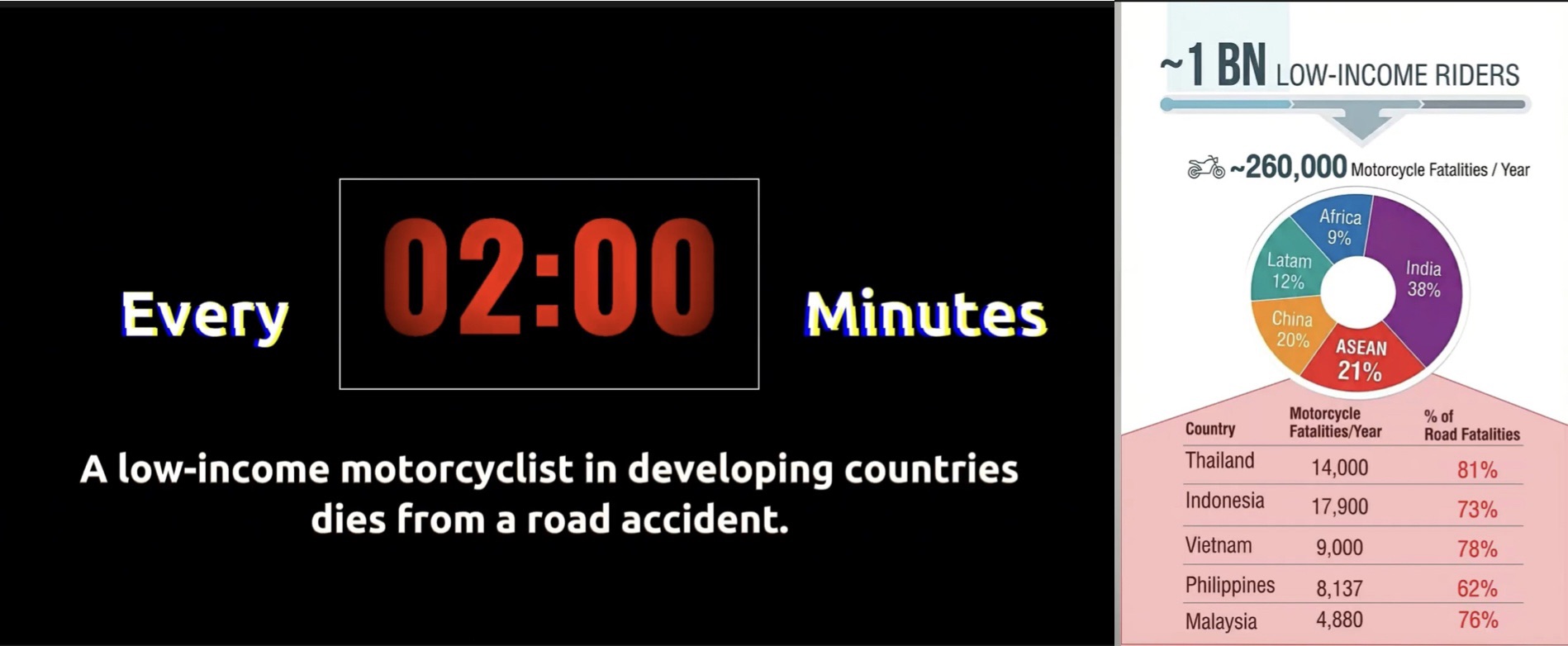
In developed countries, motorcycles travel within standard lanes. In developing markets, riders are forced to weave between vehicles, treated as second-class road users. The consequences are severe; for example, in Thailand, motorcycles account for ~80% of all road deaths. Today, more than over ~1 billion low-income riders across developing markets face daily risk with little protection. Many are the sole earners for their families, and accidents mean income losses. They urgently seek affordable protection for their most valuable assets: their motorcycles & their own lives.
Current safety systems rely largely on car-derived hardware such as LIDAR, radar, camera modules, and additional digital dashboards. These solutions typically cost $300–3,500, require professional installation, and involve vehicle modification, risking warranty voids. They are built for sedans, not scooters. That’s why all riders fall back on mirrors or shoulder checks, which often fail under fatigue/distraction. This gap is not merely technical. It is an issue of equity and survival. That is why the world needs a disruptive, software-first solution that is affordable, accessible, and designed specifically for them.
MotoSaaS (Motorcycle Safety-as-a-Service)
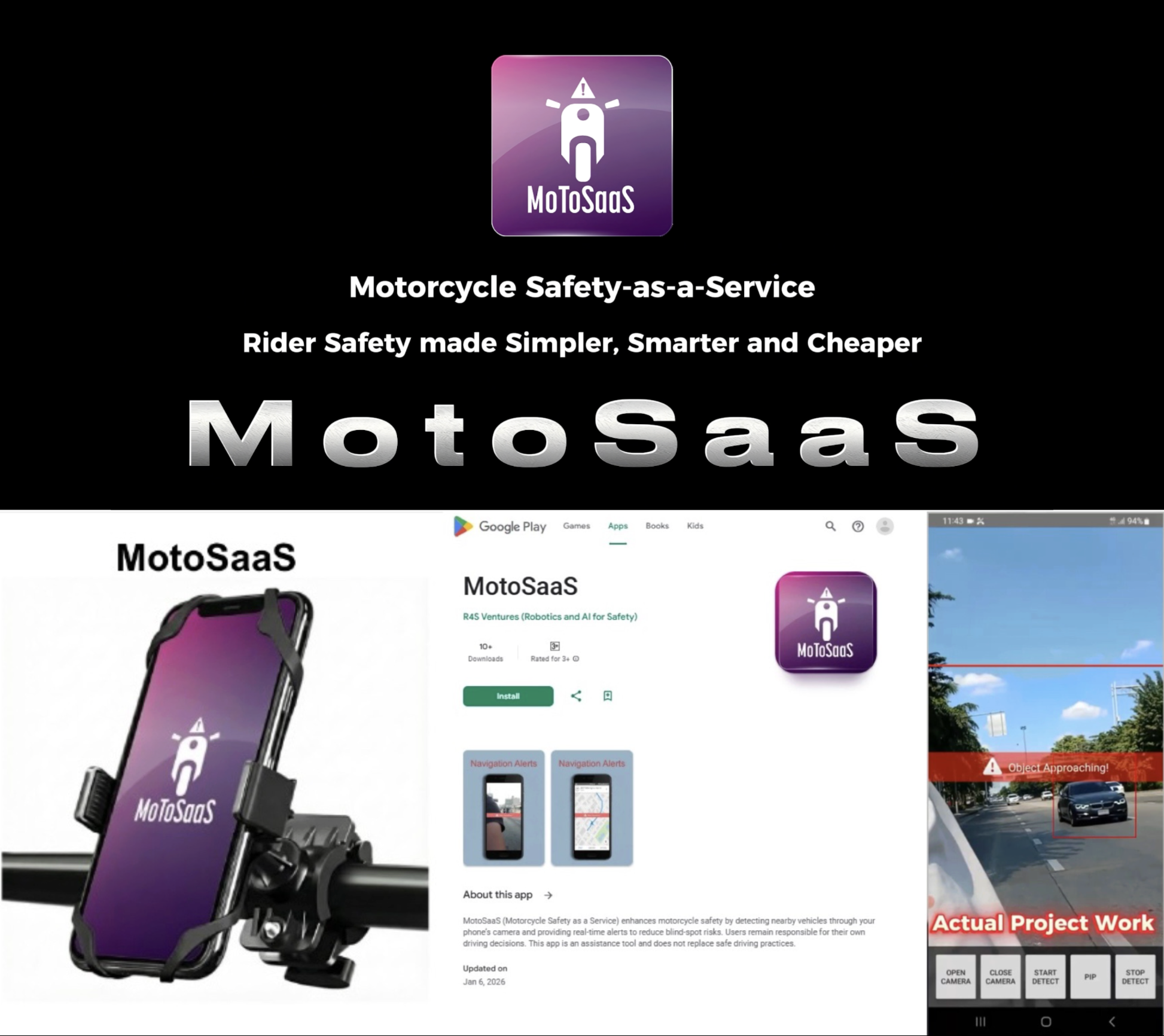
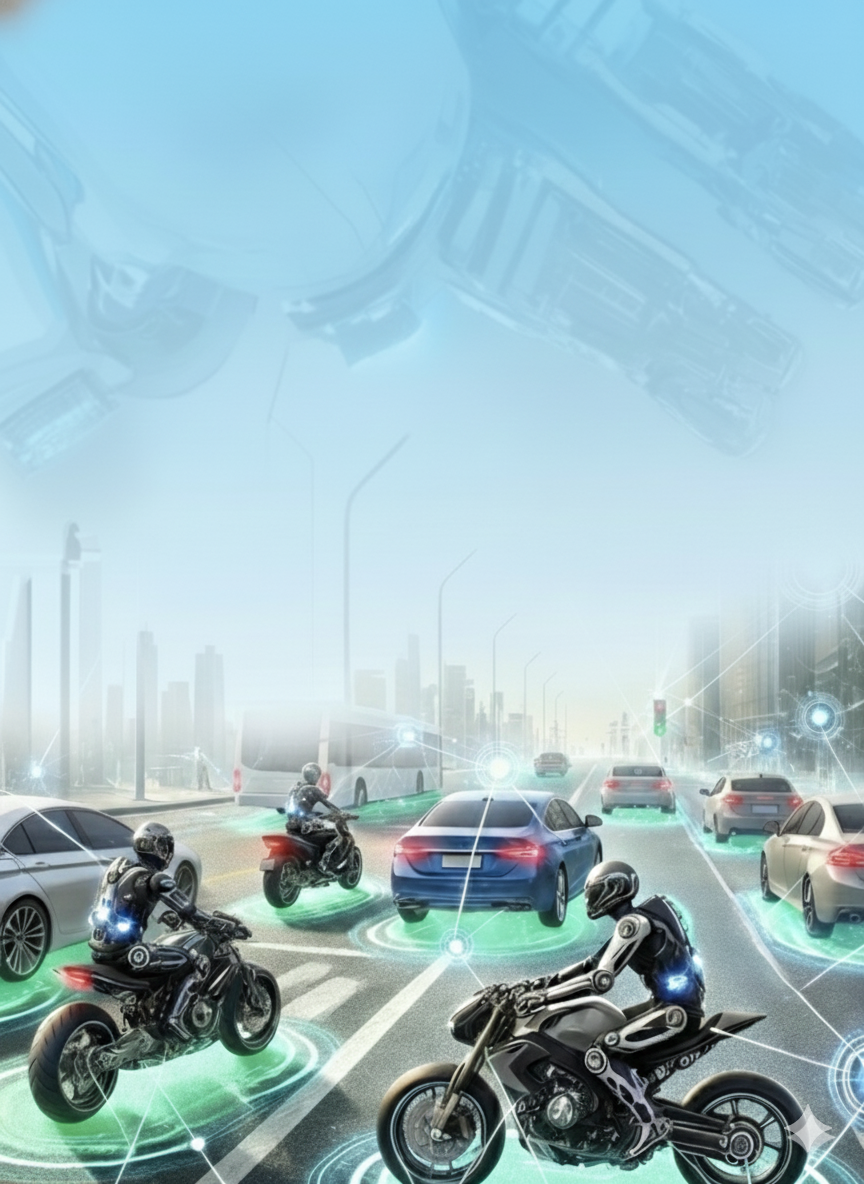
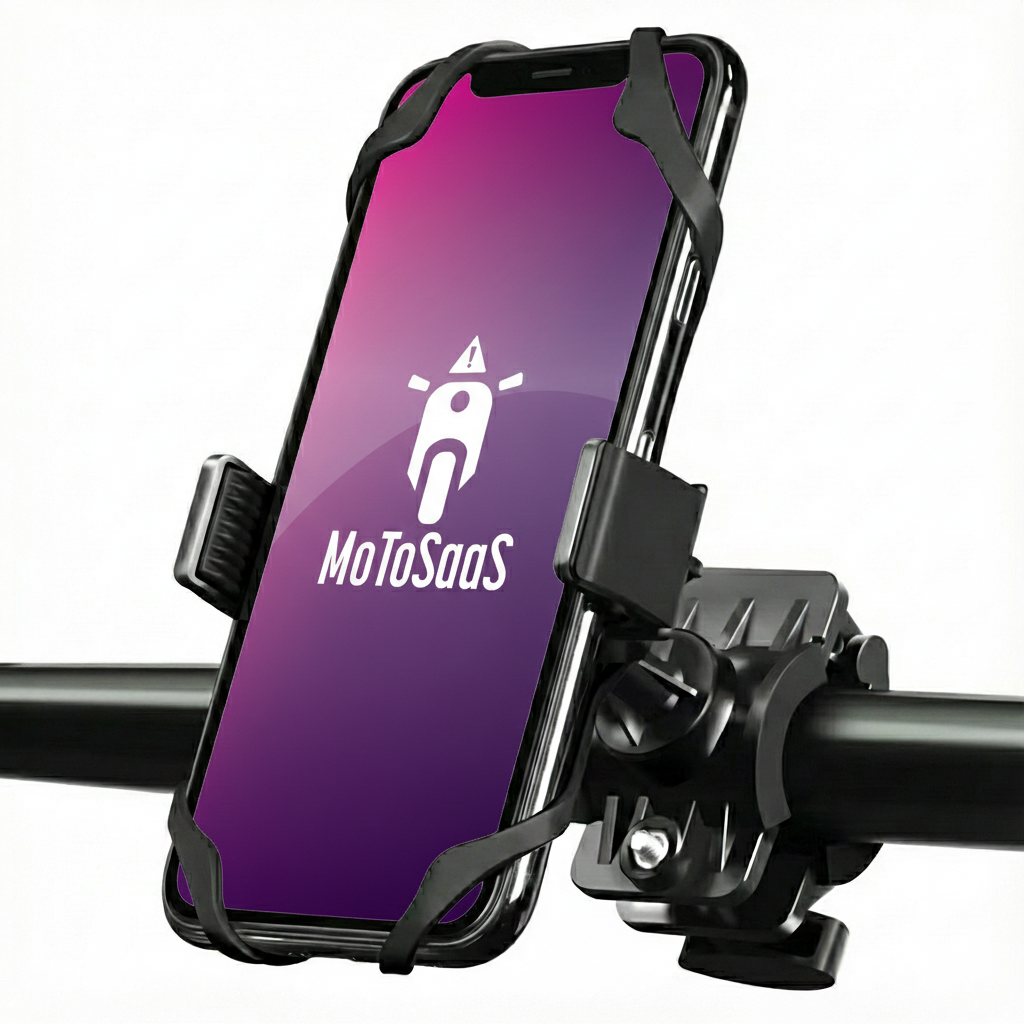
MotoSaaS is the smartphone AI that aims to democratize safety-as-a-service for ~1 billion unprotected low-income motorcycle riders globally. MotoSaaS transforms smartphones, already mounted on motorcycles for navigation, into AI-powered safety tools. Its first feature uses phone sensors to detect rider risks (e.g. front cameras for blind spots) with a modular design to integrate external wearables (e.g., smartwatches or EEG headbands for fatigue).
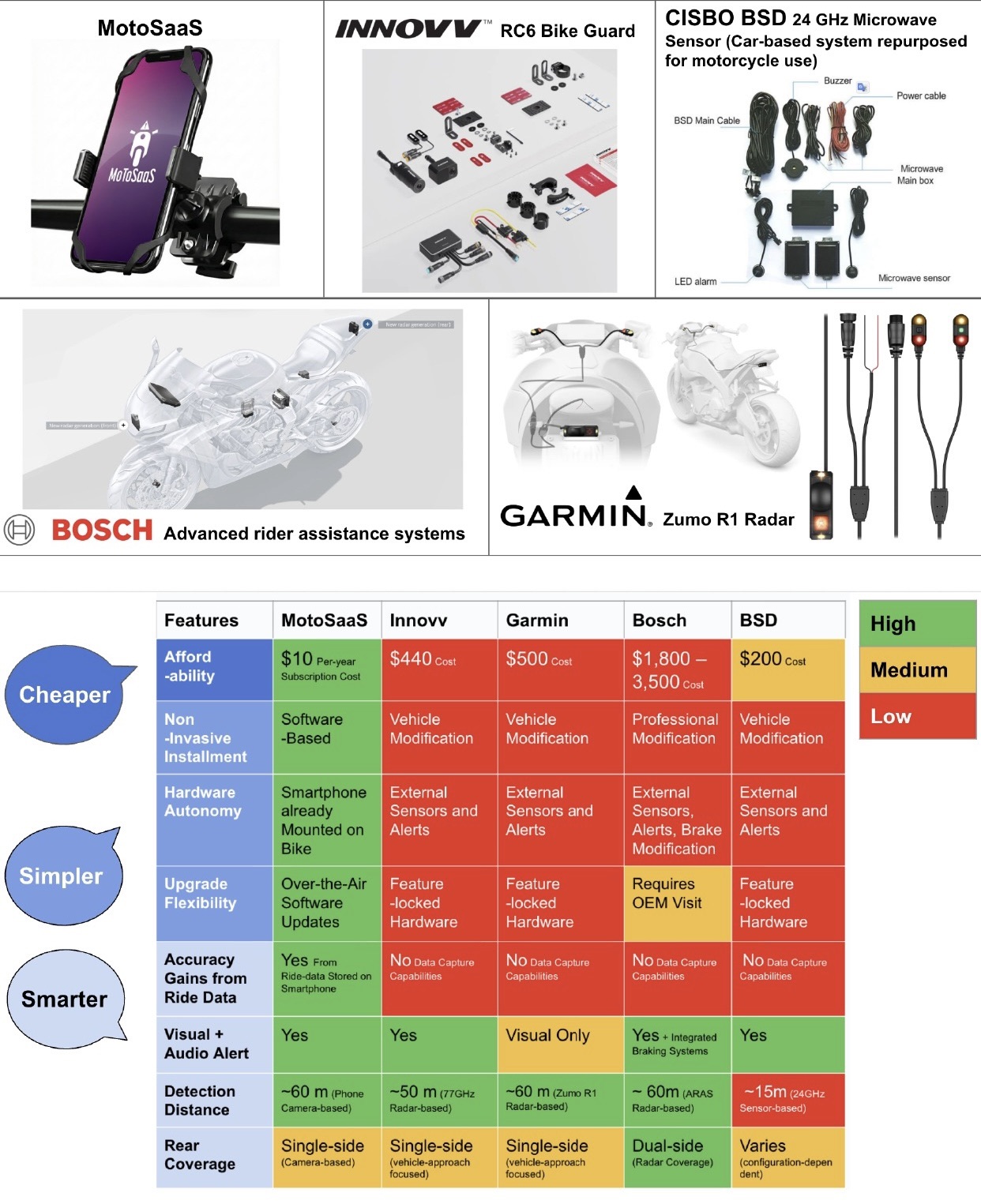
The competing external motorcycle safety solutions, mostly car-based systems, are priced at $300–$3,500, require installation, and may void warranties, making them inaccessible to low-income riders. MotoSaaS outperforms them with three advantages:
Simpler: Installs as an app with no hardware setup required, no vehicle warranty void risks
Smarter: Improves over time using ride data; enables emergency alerts, crash forensics, and insurance rewards.
Cheaper: Costs only $10/year, 30x cheaper than hardware, and can be subsidized by insurers and delivery platforms.
MotoSaaS is now available on the Google Playstore
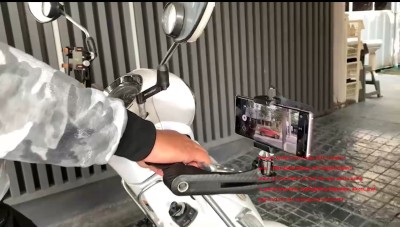
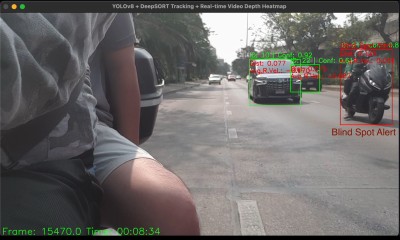
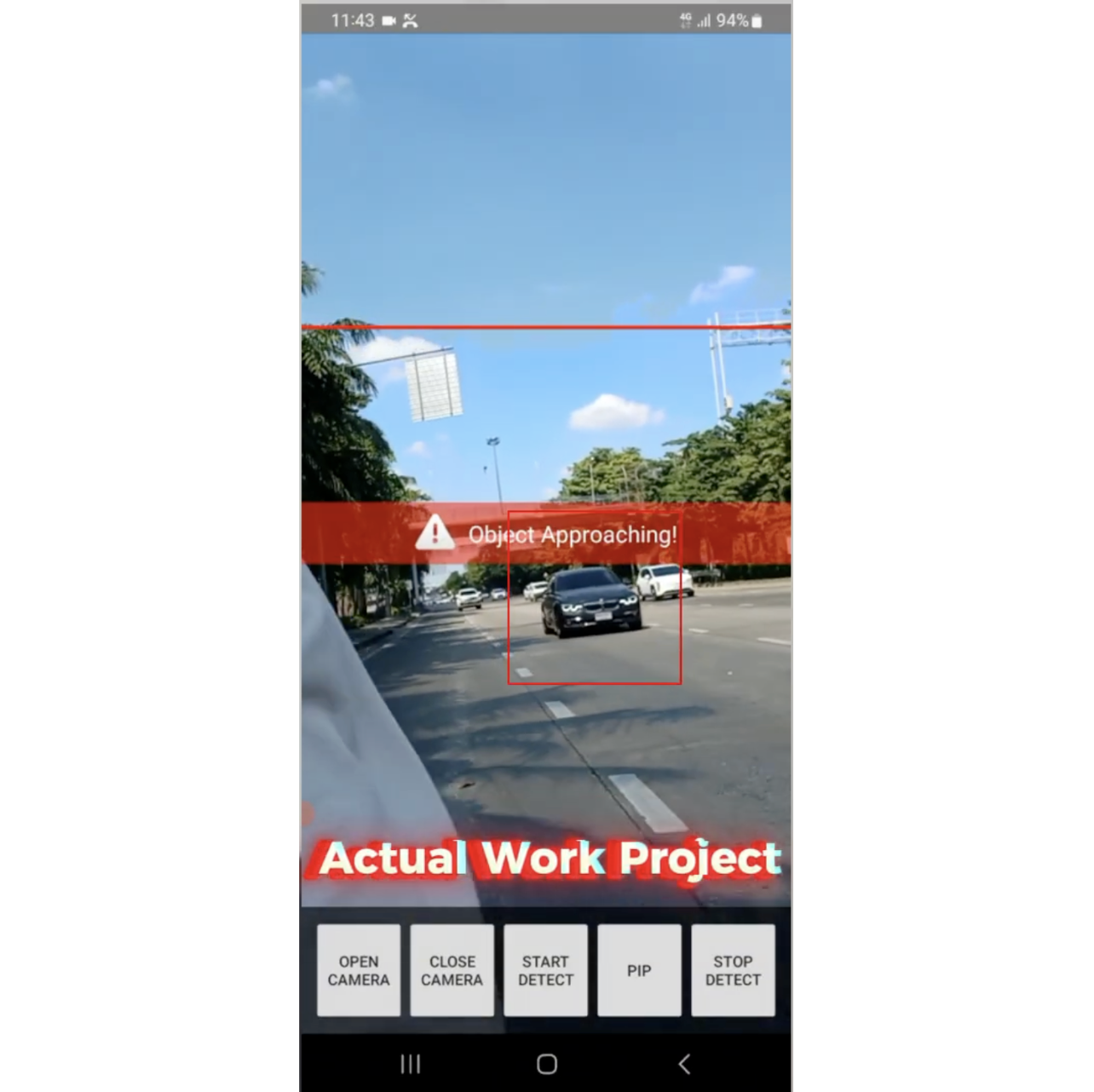
Android-based Application installed on existing smartphone mounted on motorcycles to detect blindspot using Computer Vision algorithms and smartphone’s front camera
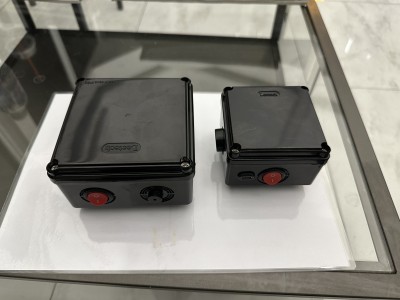
Affordable helmet-attached ultrasonic sensor for motorcycle blind-spot detection ( More compacted, better accuracy )
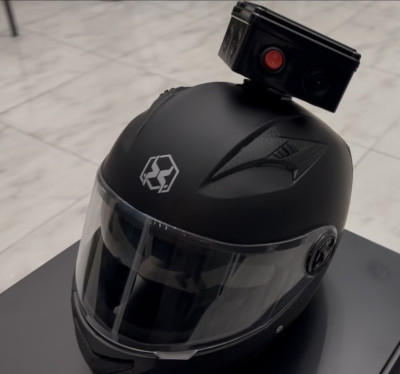
Affordable helmet-attached ultrasonic sensor for motorcycle blind-spot detection

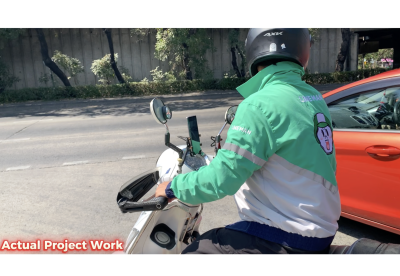
Over the past six months, we validated MotoSaaS through real-world testing. The system currently achieves ~80% detection precision in everyday riding conditions. A 14-day pilot with 12 riders rated the experience 7–8/10 for affordability, ease of setup, and seamless integration. These results mark a strong starting point, and we are actively improving accuracy, coverage, and low-light performance over time.